Skip to content
Silver LakeAnalytics

Software for your business, that gets better every day, that you own.

What we do

Our service, and what it costs

01Start here

Analysis

Answer the questions you actually have, from data you already own.

$6,000, fixed

Seven days

02

Website

The public face, built to be found and to be believed.

From$15,000

Seven days

03

Custom software

The operational system the business actually runs on.

From$60,000

Working software in two weeks, live in six to eight

04

The engine

What the system can do next quarter that it cannot do today, because by then it will have more of your business to reason over.

From$4,000 a month

It grows every quarter

Scroll

I / The problem

The tools stopped fitting a while ago

Most businesses this size are not short of software. They are running a general-purpose tool that was never designed for what they do, plus a spreadsheet that holds the parts it cannot handle, plus an inbox where the real work happens.

It works, in the sense that nothing is on fire. But nobody can see the whole picture, the same question gets answered differently by different people, and the person who understands how it all fits together is one resignation away from taking it with them.

At that point you have three options. Change how you work to suit the software. Keep paying people to bridge the gaps by hand. Or have something built that matches the business you actually run.

III / Compounding

Software that grows into your business

Work happensRecordPattern showsBetter call

Month one has no history
to reason over. Month twelve does.

Most custom software is a photograph. It captures the way you work today, freezes it, and starts going out of date the moment your business moves.

The systems we build feed. Every job, quote, email and decision that passes through leaves a trace, and the system grows on that record. It answers faster, judges better, and does things in month twelve it could not have done in month one, because by then it has more of your business inside it.

How the system tells a photograph from a logoIn production
Photograph1Shown
Badge A21Hidden
Badge B15Hidden
Badge C14Hidden

How many different people sent each image. A signature badge arrives from everyone; a real job photograph arrives from one person. That is the whole rule.

Job records fill with images, and most are not photographs. They are email signature badges riding along on every message, and file size cannot separate them: a 58 KB logo and a 58 KB photo are the same size.

The system separates them by who sends them, and nobody configured that. It was impossible in month one because there was no history to reason over. It became possible once the business's own record had built up.

IV / What we do

This is what we do

We build custom software for operations-heavy businesses.

The system the work actually runs on, not another tool sitting beside it. It is built to grow: the more of your business passes through it, the more it has to reason over, and the sharper and faster it gets. Your data is what feeds it, and your data is what you own.

Four things, in the order most businesses meet them. Each stands on its own, and each one leaves the next with more to work from.

  1. 01Start here

    Analysis

    $6,000, fixed

    Seven days

    Answer the questions you actually have, from data you already own.

    Most businesses already hold the answer to their hardest question and cannot reach it, because it is split across an accounting system, an operational tool, a spreadsheet and an inbox.

    We bring it together and answer what you actually asked: which work is genuinely profitable, where the capacity ceiling sits, what next year looks like if nothing changes. Seven days from the day we have your data.

    If the analysis does not answer the question you brought us, you do not pay for it.

  2. 02

    Website

    From$15,000

    Seven days

    The public face, built to be found and to be believed.

    A site that loads fast, reads properly on a phone, and says what the business does without making the reader work for it. Search is part of the build, not a retainer afterwards.

    Same stack and same deployment as the systems, so it is not a separate thing for somebody else to maintain. Where it makes sense an enquiry becomes a record rather than an email someone re-keys.

  3. 03

    Custom software

    From$60,000

    Working software in two weeks, live in six to eight

    The operational system the business actually runs on.

    The engineer who scoped it writes the code, so nothing is lost in a handover that never happens. You see working software inside two weeks, not a demo at the end, and from the day it goes live it starts building the record it will later run on.
    It ships with an automated test suite, which is why it can still be changed in two years without breaking. The freight platform went from specification to a live pilot in about eight weeks.

  4. 04

    The engine

    From$4,000 a month

    It grows every quarter

    What the system can do next quarter that it cannot do today, because by then it will have more of your business to reason over.

    Not a support contract. Support is availability, and availability is what gets cut in a tight quarter.

    Each quarter it grows: a decision it can now make alone, a pattern it can now recognise, a step that no longer needs a person. None of it was configured. It became possible because the record underneath it got deeper.

Most engagements start with the analysis. It is fixed price, it takes a week, and if it does not answer your question you do not pay for it.

We take a small number of engagements at a time and we choose them carefully: businesses at the point where the next stage of growth is the thing the current tools cannot carry. There is usually a wait for a build slot, and that is the trade for having the person who scoped it write the code.

This works well for

  • Businesses of roughly 20 to 200 people, running operations that do not fit off-the-shelf software
  • Logistics, trades, utilities, field services, manufacturing
  • Professional services firms with real process complexity and compliance obligations
  • Leaders with a specific question about performance or the year ahead, not just a request for a report
  • Anyone who can already name the problem, usually because they are the one suffering it

This is not a fit for

  • A dashboard with no decision attached to it
  • Ad-hoc spreadsheet work with no question behind it
  • A brochure site with no interest in what happens after someone enquires
  • Filling a seat on an existing engineering team
  • Pre-revenue startups looking for a technical co-founder

If you are in the right-hand column, we would rather say so now than three weeks into a proposal. We can usually point you at someone or something better suited.

V / About

Operations first, then data, then finance

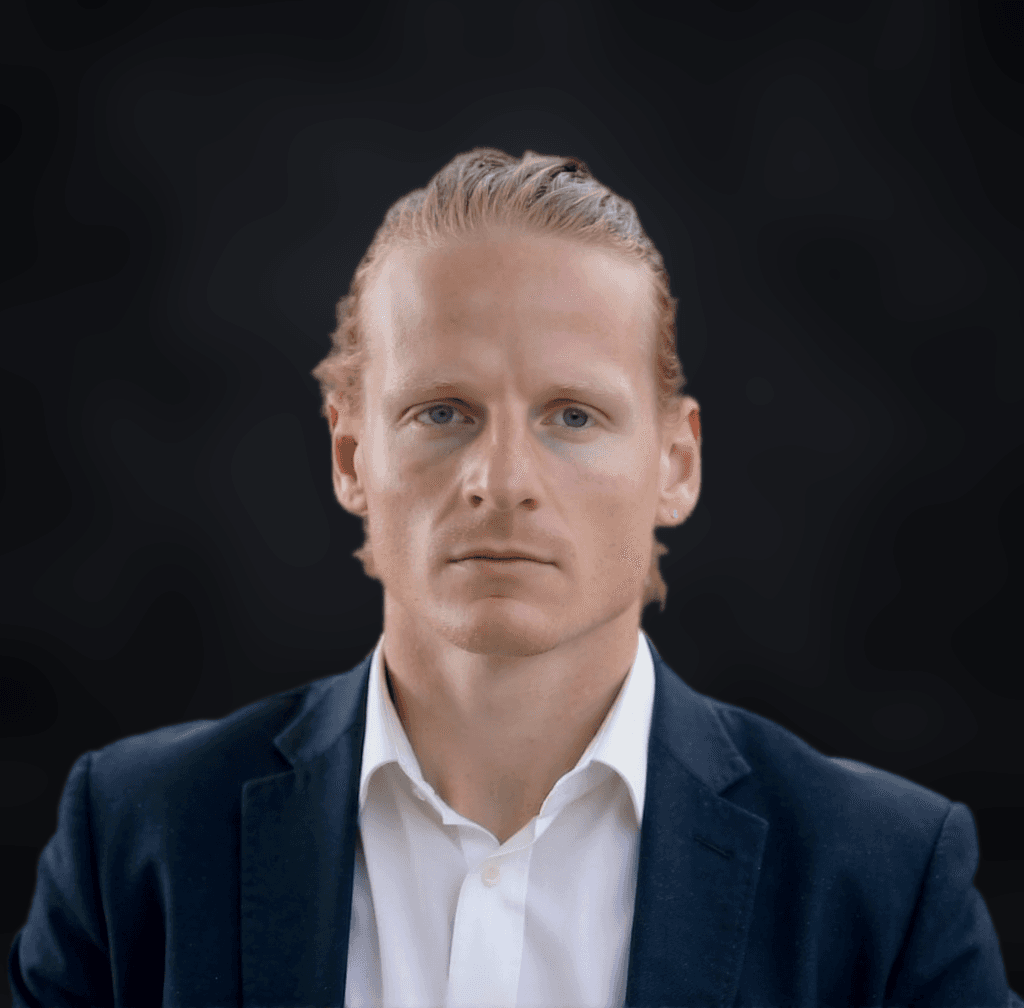
Nick Parker, Silver Lake Analytics

Nick Parker

Silver Lake Analytics, Geelong, Victoria

contact@silverlakeanalytics.com.au

I started in operations, moved into data, then took an MBA majoring in finance to round it out. I am working through the CPA program now. The order matters more than the qualifications do: I learned what a business actually does before I learned to model it, which is the wrong way round for most people who end up building software.

So I start at the process, described in plain terms. Find what is actually broken, fix that first, then build on it. Ground up rather than top down, because a system designed from the top tends to describe how the business ought to work rather than how it does.

The finance side is not decoration. It means a conversation about a system covers what it costs, what it returns and how it will be accounted for, not only what it does. And what comes out is meant to be simple to operate, which is the only test that counts once I am no longer in the room.

Tests, not promises
Systems ship with automated test suites in the hundreds. That is what makes it safe to change them a year later.
Production is the only proof
A demo proves nothing. Every system described on this site is running a real business right now.
The honest answer, including no
One of the case studies on this site is an engagement where our recommendation was not to build software at all.

VI / Point of difference

One engineer, through the whole process. And that's the point

One engineer carries an engagement from the first conversation to production and stays with it afterwards, across data architecture, data engineering, systems design and the build itself.

That removes the layer where the cost and the loss usually sit. No account manager relaying, no handover document where the context dies, no junior learning your business on your budget. You email the person who wrote the code.

The background is finance and operational systems rather than pure software, so the conversation starts at the process. Less is lost translating what the business needs into what gets built, which is where most custom software goes wrong.

Next

Start with a conversation, not a proposal

Thirty minutes. Tell us what is not working and we will tell you whether it is worth building something, including when the answer is no.